

Builders planning attic insulation in Lehigh Acres, Florida should treat moisture as the first problem and R-value as the second. Seal the air leaks, pick materials that tolerate humidity, and decide early whether the attic stays vented or becomes a sealed, conditioned space.
Heat gets the attention, but moisture causes the expensive callbacks. Summers here are long and wet, and the attic is where hot sun meets humid air.
Florida’s energy code lists Lee County as Climate Zone 1A, flagged warm-humid, in the Florida Building Code, Energy Conservation. In one monitored South Florida home, roof sheathing reached about 140°F on summer afternoons, according to an Oak Ridge National Laboratory and University of Florida field study. That heat drives moisture out of the wood and into the attic air.
No single product wins every attic. The right pick depends on where the air handler and ducts sit, how tight the house is, and how much humidity the HVAC system can remove.
When choosing attic insulation for hot climates, the U.S. Department of Energy suggests R30 to R49 on an uninsulated attic in Climate Zone 1. It also says moisture and compression cut an insulation’s rated R-value. That makes insulation for humid weather a question of keeping it dry and installing it at full depth.
Radiant barriers reflect heat but have no R-value of their own, so they work alongside insulation, not in place of it.
| Approach | Works best when | Watch for |
|---|---|---|
| Closed-cell foam at roof deck | Ducts or air handler sit in the attic | Higher material cost |
| Open-cell foam at roof deck | The attic is truly conditioned | Moisture storage in sheathing |
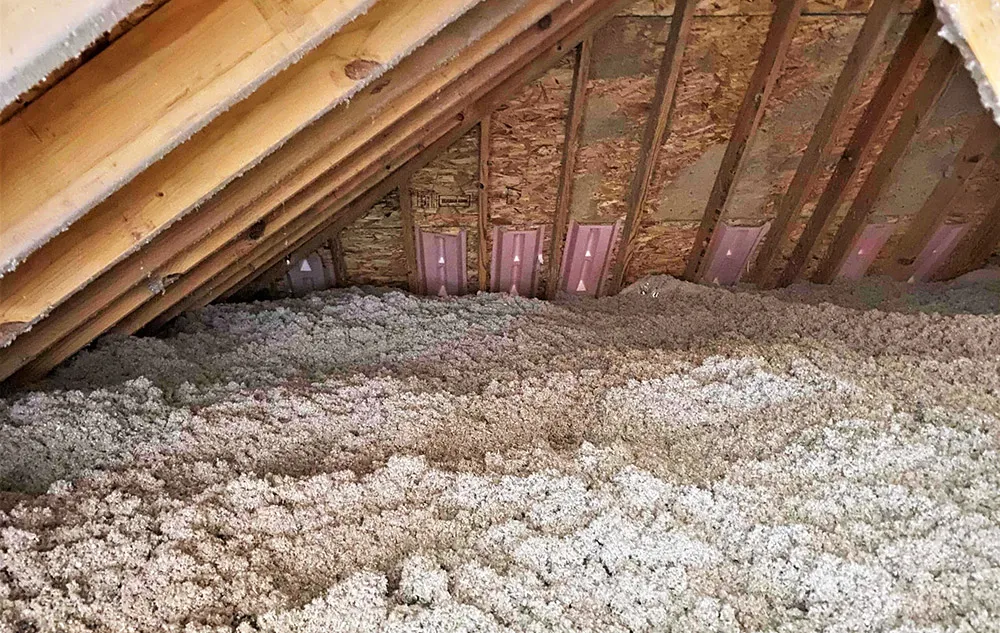
| Blown-in on attic floor | Ducts run outside the attic | Air leaks at the ceiling plane |
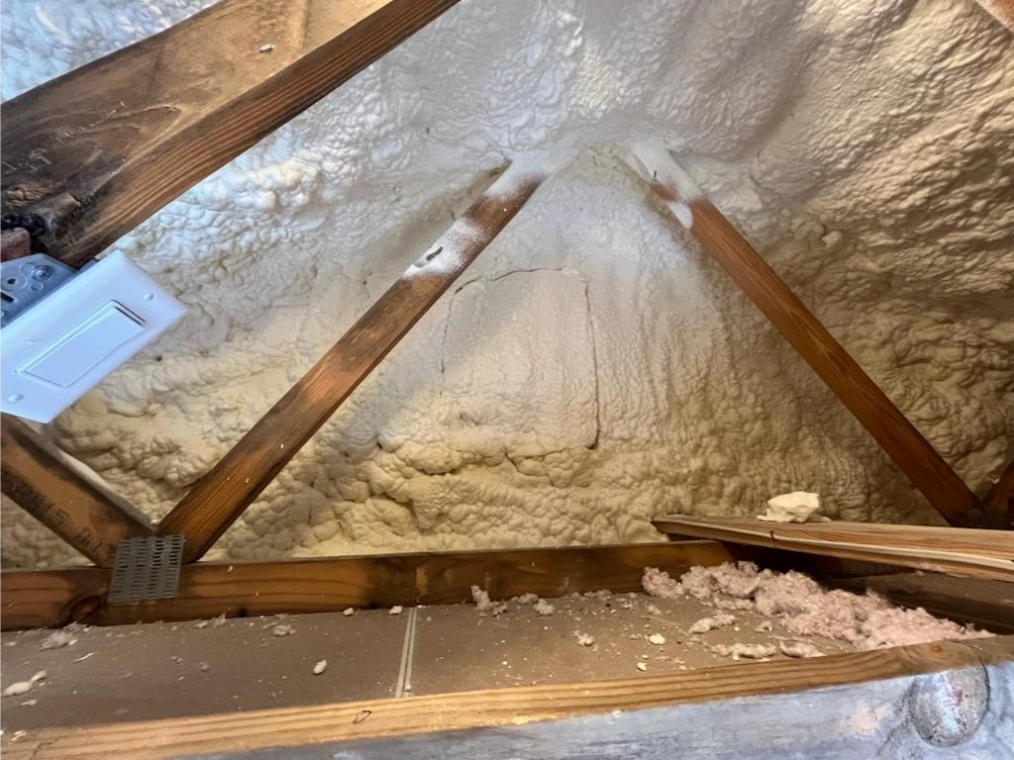
Spray foam insulation for builders pays off when the crew and the HVAC plan are ready for it. Foam at the roofline makes the attic part of the thermal envelope, so ducts and the air handler stop sitting in a hot, vented attic.
The Oak Ridge study calls ducts in conditioned or semi-conditioned space typically one of the most energy-saving features. Foam type changes the moisture picture, though. Building Science Corporation reports that open-cell foam is very vapor open, so indoor moisture passes through it, gets stored in the roof sheathing, and the sun drives it back out. The same insight reports no such problems with closed-cell foam. Open-cell can still work, but only in a conditioned attic.
For moisture-resistant attic insulation at the roof deck, closed-cell foam is the lower-risk pick. Workmanship counts too. The Oak Ridge study notes that poor workmanship and gaps at roof-to-wall connections caused air leakage in some sealed attics.
Foam or fiberglass, the moisture plan decides whether the attic stays healthy. Three jobs come before thickness.
Seal first. Air leaks carry humid air past insulation, so close ceiling penetrations, top plates and duct joints before anything goes down.
Next, check where the ducts sit and how hard the HVAC works. In the Florida study, a Venice home with careful sealing and a dehumidifier kept attic humidity low. A Gainesville home set to 80°F through the summer showed excess water vapor in the late afternoon.
Last, give the attic a moisture exit. In its proposed code language, Building Science Corporation lists supplying air from the HVAC ductwork or adding mechanical dehumidification as ways to condition an unvented attic.
Settle these items at the design stage, before the insulation crew arrives.
Sorting out foam type, R-value or attic design on a Lehigh Acres project? At Spray Foam Contractors LLC in Lehigh Acres, Florida, we offer a free quote. Call us at (239) 688-4979 or email [email protected], and we’ll go over your attic plan with you.
Some homeowners report lingering odors, mostly with open-cell foam in humid attics, and moisture is a common suspect. Ask your contractor how the attic will be ventilated during the install and how humidity will be controlled afterward.
Usually not. Foam on the roof deck makes the attic part of the sealed envelope, and outdoor air in Florida is hot and humid, so vents can add moisture. Plan the attic as conditioned space.
It can. In the Florida field study, a tile roof produced gentler humidity swings under the deck than a metal roof, because the sheathing ran cooler. Tell your contractor the roof type so the moisture plan fits.
It often helps, mainly by bringing ducts inside the thermal envelope, but results vary. One retrofit owner in the Florida study reported a peak summer electric bill dropping from about $250 to $150. That is one home, not a promise.
Often yes, if the old layer is dry and clean. For Climate Zone 1, the Department of Energy lists R19 to R38 as the amount to add over 3 to 4 inches of existing insulation. Remove wet material first.