

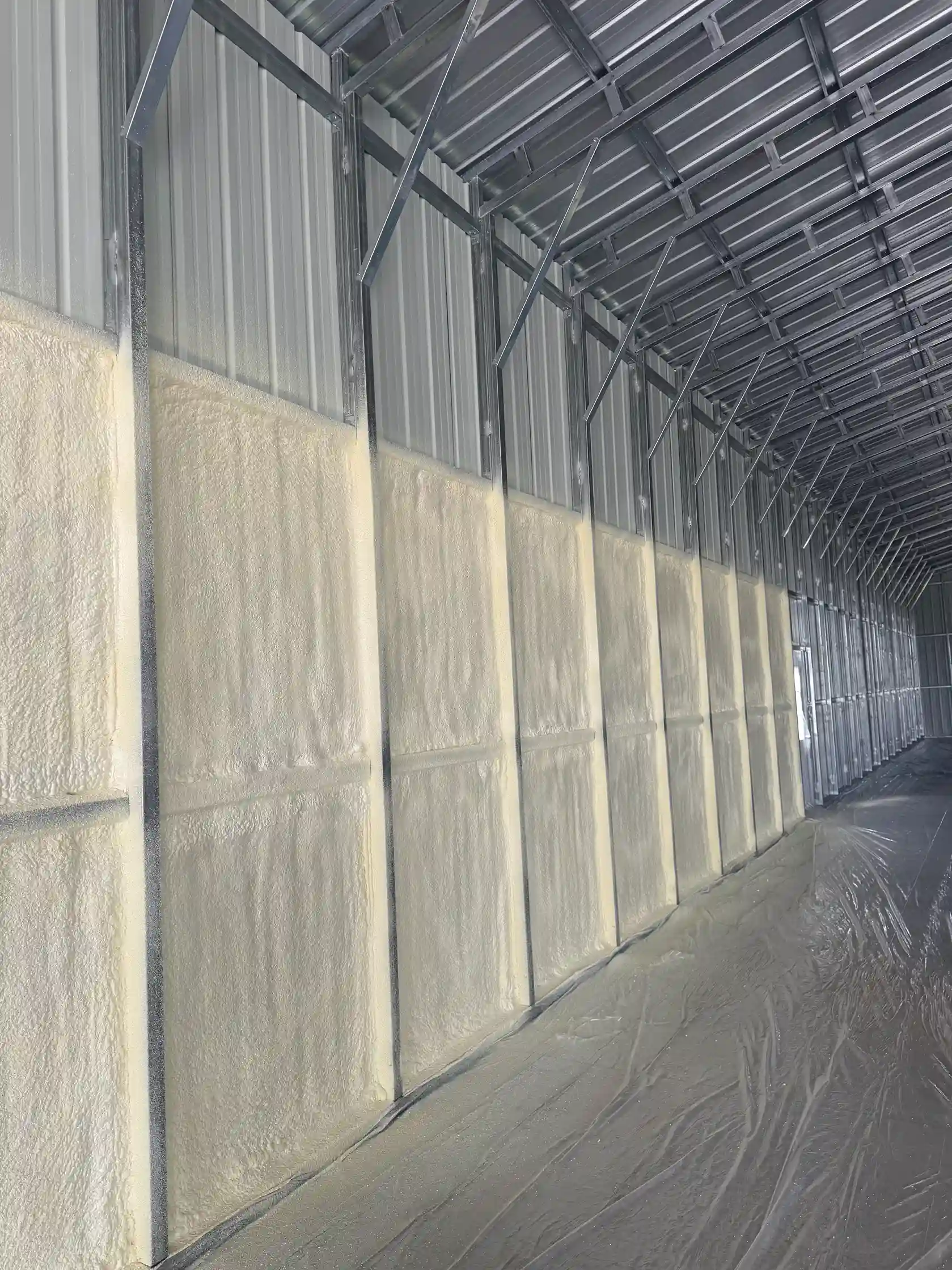
In the open-cell vs. closed-cell spray foam debate, closed-cell insulates better per inch and handles Fort Myers moisture and storms better. Open-cell foam costs less and works in dry, air-conditioned spaces. For roof decks and any spot that could get wet, we recommend closed-cell.
Both foams start as a liquid that expands and seals gaps. This spray foam insulation in Fort Myers, FL shows where they split.
Open-cell spray foam insulation is light and spongy. Closed-cell spray foam insulation is dense and rigid.
| Feature | Open-Cell | Closed-Cell |
|---|---|---|
| R-value per inch | About 3.6 | About 6 |
| Weight per cubic foot | 0.5 lb | 2 lb |
| Water | Absorbs it | Resists it |
| Vapor | Passes through | Mostly blocked |
| Cost | Lower | Higher |
| Sound control | Better | Weaker |
Closed-cell wins on R-value per inch. The DOE Building America Spray Foam Guide lists typical aged values near R-3.6 per inch for open-cell and R-6 per inch for closed-cell.
That gap matters in tight spaces like rafter bays, where you can’t fit much thickness. It also affects cost. The same guide put closed-cell at roughly 60 percent more per unit of R-value than open-cell spray foam. That guide dates to 2009, so today’s prices differ, and we won’t quote a number without seeing your job.
Lee County sits in climate zone 1A, which the Florida Building Code, Energy Conservation classes as warm-humid. Here, moisture matters more than R-value.
Open-cell lets vapor through and holds liquid water, up to about one-third of its volume per the DOE guide. A roof leak or wet siding can soak it. The guide also warns that in hot-humid climates, air conditioning may not dry a wet open-cell assembly, especially when snowbirds close up the house for summer. That’s a real Fort Myers situation.
Closed-cell doesn’t absorb water. The DOE guide calls it preferred for hot-humid walls and roof rafters, and rates open-cell only acceptable. Some manufacturers say open-cell suits southern climates, and it can work in a sealed attic with the AC running year-round. When sources split like this, we lean on the independent one and treat the AC running year-round as a condition, not a given.
Hurricane Ian pushed storm surge into Fort Myers neighborhoods in 2022. Foam type can decide what you tear out afterward.
FEMA Technical Bulletin 2 lists sprayed polyurethane foam and closed-cell plastic foams as acceptable below the base flood elevation. It groups open-cell plastic foams with materials it doesn’t accept there. If your home is in a flood zone and you’re rebuilding or doing a major remodel, your local building office decides what applies.
Closed-cell also adds strength. The DOE guide notes University of Florida studies showing closed-cell foam gluing roof decking to trusses helps in hurricane country.
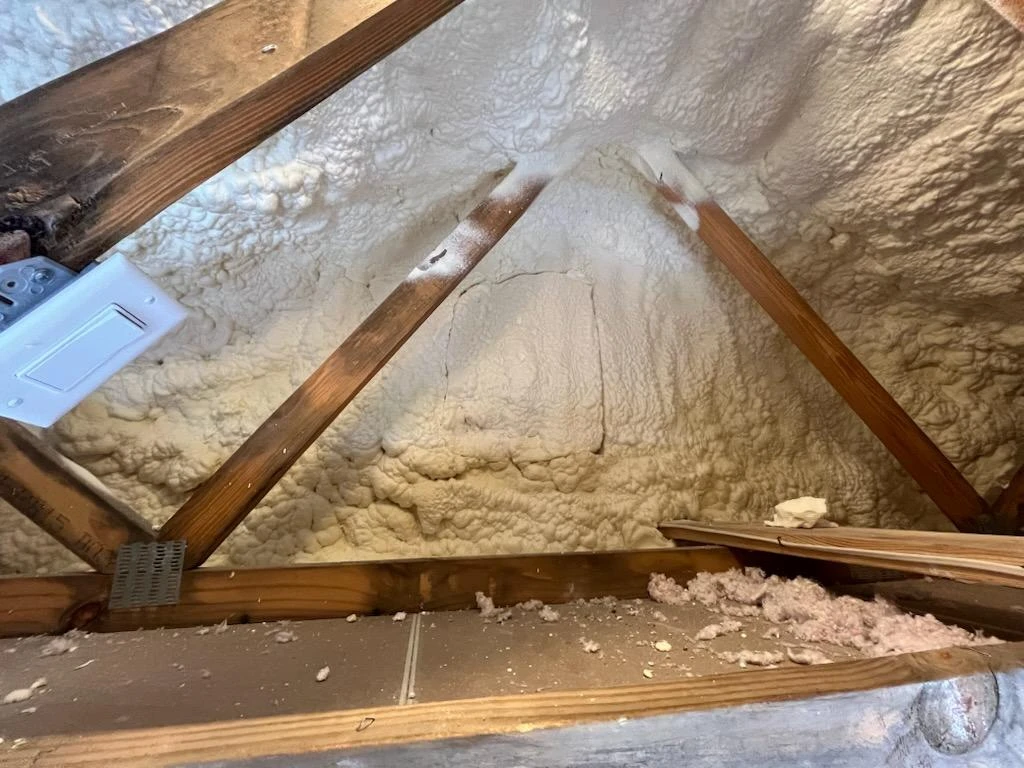
Match the foam to the spot, not the whole house. Here’s how we’d split it.
Run through these five questions before you sign anything.
Not sure which foam fits your roof or walls? Spray Foam Contractors LLC in Fort Myers, FL offers free quotes. Tell us where the foam is going, and we’ll walk you through both options.
Call (239) 688-4979 or email [email protected].
Yes. A common split puts closed-cell where moisture and strength matter, like the roof deck, and open-cell elsewhere. We can plan that during your free quote.
It depends on your target R-value. At typical values, R-20 takes about 5.5 inches of open-cell or roughly 3 to 3.5 inches of closed-cell. Closed-cell usually goes on in layers of 2 to 3 inches per pass, per the DOE guide.
It can. Water doesn’t soak through it, so a leak may not show inside. Open-cell shows wet spots sooner but absorbs the water. Either way, fix roof leaks first and check the roof after storms.
Possibly. A tighter, better-insulated home needs less cooling, and an oversized unit can short-cycle and remove less humidity. Have an HVAC pro recheck the sizing.
We can’t promise a number. Savings depend on your air leaks, attic, ducts, and AC. Spray foam seals leaks better than fiberglass or cellulose, which is where much of the gain comes from.