

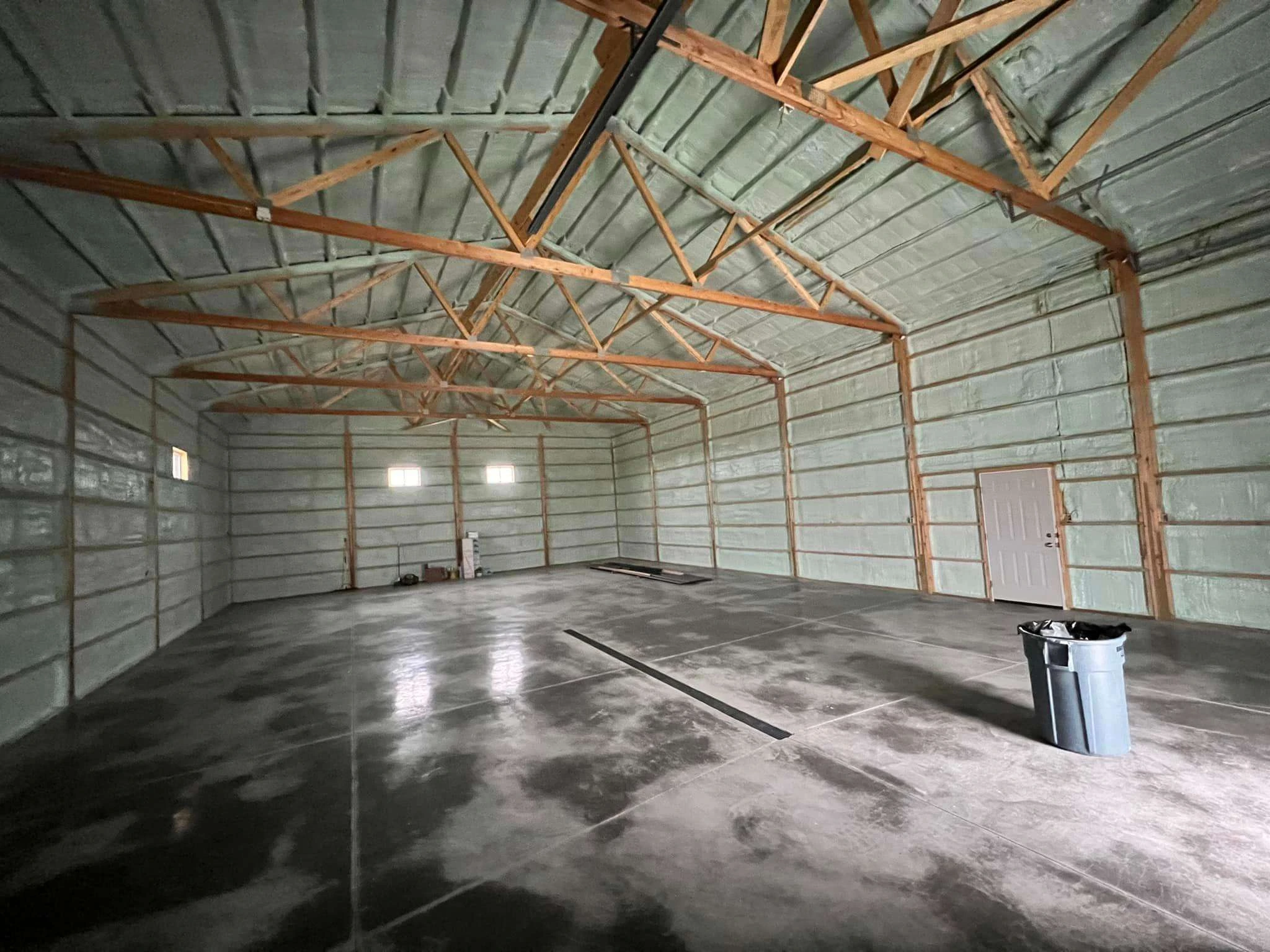
Closed-cell spray foam installation in Lehigh Acres, FL typically costs between $4,000 and $100,000 per project, with the average whole-home envelope project running about $30,000. Smaller scopes like a crawlspace, rim joist, or limited wall application start near the $4,000 entry point, while full roofline-plus-walls jobs on larger homes and small commercial buildings reach the high end. What drives the number in Lehigh Acres is thickness: closed-cell foam delivers roughly R-5.8 to R-6.8 per inch My Florida Home Energy, and Lee County sits in Florida Building Code Climate Zone 1, where attics require a minimum of R-30. With more than 40,000 housing units here and one of the fastest growth rates in Lee County Wikipedia – Lehigh Acres, Florida, we price every job on square footage, target R-value, access, and site conditions, never on guesswork.
We keep our pricing transparent because the open-cell versus closed-cell question is the first thing almost every homeowner here asks us. Here is how our typical project pricing stacks up across services:
| Service | Typical Low | Typical Average | Typical High |
|---|---|---|---|
| Closed cell spray foam | $4,000 | $30,000 | $100,000 |
| Open cell spray foam | $4,000 | $9,000 | $30,000 |
| Attic insulation | $4,000 | $6,500 | $30,000 |
| Insulation replacement | $4,000 | $6,500 | $30,000 |
| Insulation removal | $4,000 | $6,500 | $30,000 |
The spread on closed-cell spray foam work is wide because the difference between a 1,100-square-foot crawlspace and a 3,800-square-foot roofline retrofit with wall cavities is enormous. Most Lehigh Acres homes we work on fall between 1,500 and 4,000 square feet, and the average home we see is a concrete-block or frame single-family house from the 2003-2007 building boom, when more than 7,500 homes went up in this community in 2006 alone.
One honest note on minimums: we take on projects of any square footage if the customer covers our minimum trip fee for crew and equipment for the day. Jobs under about 1,000 square feet rarely make financial sense otherwise, because mobilizing a truck, rig, and trained crew costs the same whether we spray 300 square feet or 3,000.
Closed-cell spray foam is the most expensive insulation per square foot we install, and the reasons are specific to this region:
There is also a quality premium worth protecting. Studies show an improperly installed thermal envelope can lose 30 percent or more of its rated performance, which means a cheap spray job can cost you twice.
| Factor | Closed-Cell Spray Foam | Open-Cell Spray Foam |
|---|---|---|
| R-value per inch | R-5.8 to R-6.8 | R-3.6 to R-3.8 |
| Typical project average | $30,000 | $9,000 |
| Typical high end | $100,000 | $30,000 |
| Inches needed for R-30 attic | About 5 | About 8+ |
| Best use in Lehigh Acres | Rooflines, walls, crawlspaces, metal buildings | Deep attic cavities, sound control |
Both are air sealants and both are highly effective EPA. Closed-cell earns its premium where humidity, storm exposure, and tight framing depths demand maximum R-value in minimum thickness. Open-cell wins on budget when there is ample depth to spray into.
| Project Type | Home/Building Size | Estimated Cost |
|---|---|---|
| Closed-cell crawlspace or rim joist retrofit | 1,000-1,500 sq ft home | Starts around $4,000 |
| Open-cell attic fill, retrofit | 1,500-2,500 sq ft home | Around $9,000 average |
| Closed-cell roofline + walls, new construction | 1,500-2,500 sq ft home | Near $30,000 average |
| Closed-cell full envelope, larger new build | 2,500-4,000 sq ft home | $30,000-$100,000 |
| Closed-cell retrofit with old insulation removal | 2,500-4,000 sq ft home | Project cost plus removal, which averages $6,500 |
| Small commercial building, closed-cell envelope | Mixed commercial | Up to $100,000 |
Our own project data, plus federal safety guidance on application conditions CPSC, points to seven variables that move the number:
| Factor | Direction | Why It Matters |
|---|---|---|
| Square footage | Increases price | More surface area means more material and spray time |
| Thickness / R-value target | Increases price | Every added inch is another pass and another layer of cost |
| Access difficulty | Increases price | Tight crawlspaces and steep rooflines slow the crew down |
| Ease of access | Lowers price | Open, walkable attics are the fastest jobs we run |
| Old insulation removal | Increases price | Vacuum-out and disposal is a separate process, averaging $6,500 |
| Roof pitch | Increases price | Steep pitches require staging and slower, safer application |
| Travel distance | Increases price | Fuel and crew time are factored for outlying jobs |
Material price changes also play a role, since foam chemistry costs shift with the market. And yes, location matters: two identical homes can price differently based on travel time alone.
Closed-cell foam is applied by trained professionals using high-pressure equipment, and the health evidence is clear enough that federal agencies publish specific protocols. Exposures to isocyanates, the key ingredient in spray polyurethane foam, during and after application can cause asthma, lung damage, and respiratory irritation, which is why the EPA maintains ventilation and re-entry guidance for every job EPA. The practical takeaway for your family: plan to be out of the house, pets included, for at least 24 hours after we spray, and we will walk you through re-occupancy timing before we start CPSC. This is also why DIY foam kits are a poor substitute for whole-home work; two-part high-pressure systems are professional-only equipment.
This investment makes sense if you:
It may not be the right fit if you:
Here is the math most homeowners skip. If your attic insulation is original to a 2006 build, it has been underperforming through nearly two decades of Southwest Florida summers, and every month of delay is another month of inflated FPL bills. Underspraying to save money up front is just as costly, since a foam job applied below required depth quietly gives up a third of its rated performance. The most expensive closed-cell project is the one you pay for twice.
Spray Foam Contractors LLC installs closed-cell spray foam throughout Lehigh Acres and the surrounding Lee County communities, and we price from your actual square footage, framing, and access conditions, not from a generic chart. Call us at (239) 688-4979 or email [email protected] and we will measure, calculate the exact inches needed for code, and put a firm number in writing.
Request a Free Quote Book an On-Site Assessment
Stop paying to air condition the outdoors.
In most cases here, yes, because closed-cell reaches R-30 in roughly five inches versus eight or more for open cells. For shallow rooflines, walls, and humid crawlspace applications, the per-inch performance justifies the price difference.
Plan to vacate, including pets, for at least 24 hours after spraying. Re-entry timing can vary by product and who lives in the home, so we confirm the safe window with you before the crew arrives.
Lehigh Acres sits in Climate Zone 1, which requires a minimum of R-30 attic insulation. With closed-cell foam at R-5.8 to R-6.8 per inch, that takes about five inches of applied foam.
In most retrofit attics, yes, because settled fiberglass blocks adhesion and hides air leaks. Removal is a separate service that averages $6,500 and is one of the biggest cost factors we discuss during quoting.
It can, since fuel, travel time, and crew logistics are factored into every bid. Two identical homes in different parts of our service area can receive slightly different pricing for that reason.