

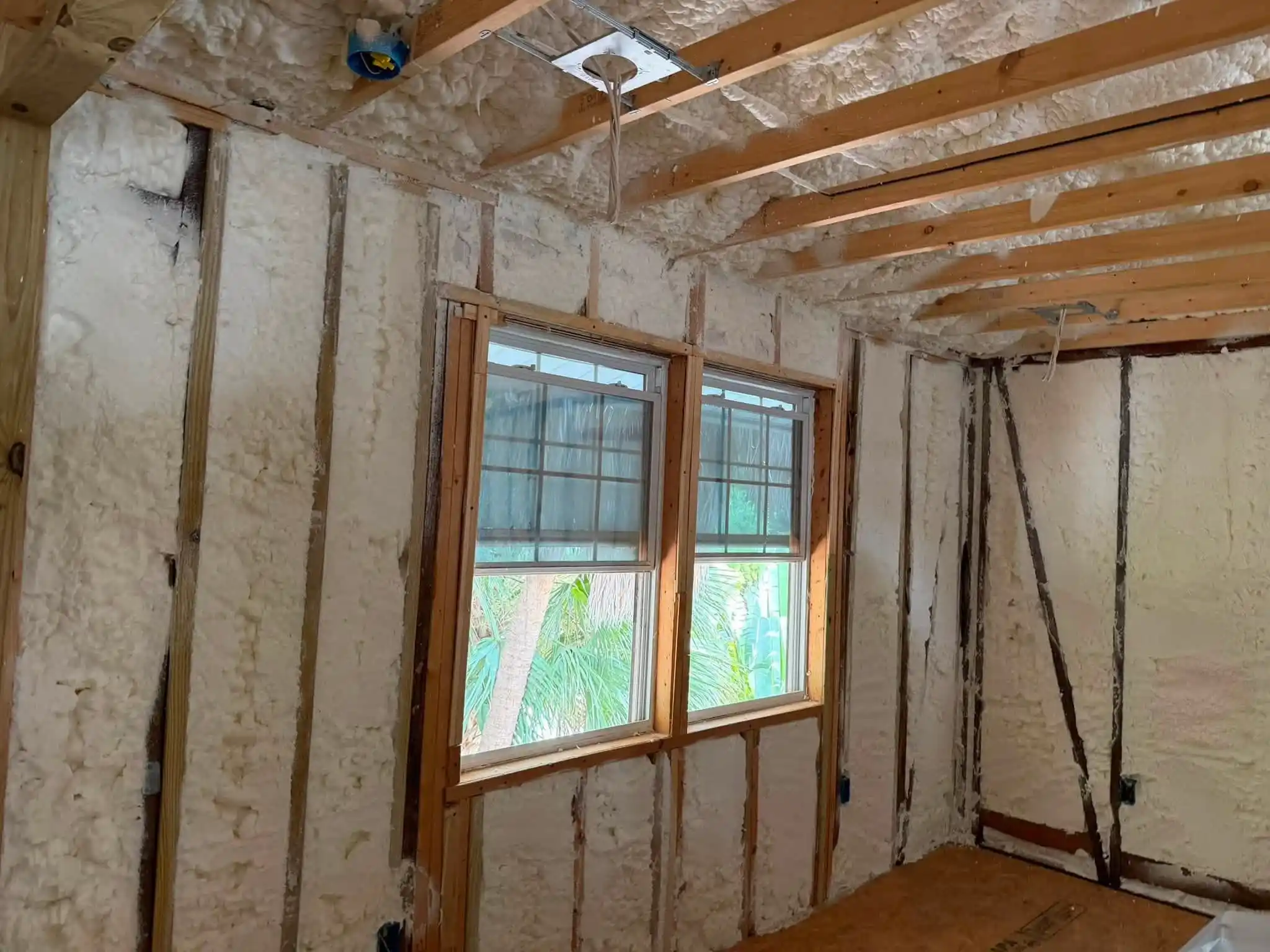
Residential spray foam insulation improves Lehigh Acres home energy efficiency by insulating and air sealing in one step. It blocks the heat and humidity that force your AC into long run times, so less energy gets wasted month after month.
Spray foam starts as two liquid chemicals that mix at the spray gun. When our crew applies it inside a wall cavity or across an attic roofline, the blend expands to fill gaps, corners, and holes that fiberglass batts and blown-in material can’t reach. As it cures, it sets into a solid that blocks heat and stops air movement at the same time.
The usual targets for residential spray foam insulation in Lehigh Acres, FL are attic rooflines, attic floors, exterior walls, rim joists, and garage ceilings. In Lehigh Acres, the attic normally comes first. A vented attic with thin, aging insulation heats up throughout the afternoon, and gaps in the ceiling allow that heat to reach your bedrooms just when your AC is working hardest. Professional spray foam insulation in Lehigh Acres helps seal these gaps, improve indoor comfort, and reduce unnecessary cooling costs.
Before choosing the right foam for your home, it helps to understand the benefits and types of spray foam insulation and how professional installation affects long-term performance.
Our cooling season stretches across most of the year, and that changes the math. Up north, insulation talk centers on heating. Here, cooling owns the bill. Federal survey data backs this up: air conditioning accounts for 28% of total site energy use in Florida homes, according to the U.S. Energy Information Administration, roughly triple the national share.
Humidity piles on. Every crack in a ceiling or wall lets moist air seep in, and your AC then burns extra energy squeezing that water back out. An attic over a Lehigh Acres home can climb well past 130 degrees on a summer afternoon, and ducts running through that space lose cool air before it ever reaches the rooms.
Ducts deserve a special mention. In many local houses, the air handler and duct lines live in that brutal attic, and the 2023 Florida energy code now bars attic air handlers in new construction for good reason. Shielding that equipment is one more reason roofline work often pays off first under the Florida Building Code.
Be skeptical of anyone promising to cut your bill in half. The honest number comes from EPA modeling: air sealing plus attic insulation saves about 15% on heating and cooling costs nationally, per ENERGY STAR. Their climate table shows only 5 to 7 percent for Zone 1 counties like ours, because winters here barely register.
Results swing on starting condition, though. A home with a leaky attic, crushed batts, and ducts in a blazing roof space has far more to gain than a newer, tighter build. Age matters too, since Florida homes built before modern energy codes often carry a fraction of today’s required attic insulation. Thermostat habits, window shading, and duct condition all move the needle as well.
Both foams cut energy waste; they just do it differently. The right pick depends on where the foam goes, how your roof assembly is built, and your budget. Here’s the short version.
| Feature | Open-Cell Foam | Closed-Cell Foam |
|---|---|---|
| R-value per inch | About 3.5 to 4 | About 6 to 7 |
| Water | Vapor passes through | Resists water absorption |
| Feel and strength | Soft, spongy | Dense, adds stiffness |
| Best fits | Interior walls, sound control, deep cavities | Rooflines, humid spots, thinner cavities |
| Relative cost | Lower | Higher |
Money follows heat, and heat follows the attic in Florida homes. These are the spots where our customers usually see the fastest payoff, listed in the order we tackle them.
You don’t need lab equipment to spot trouble. Watch for these everyday clues.
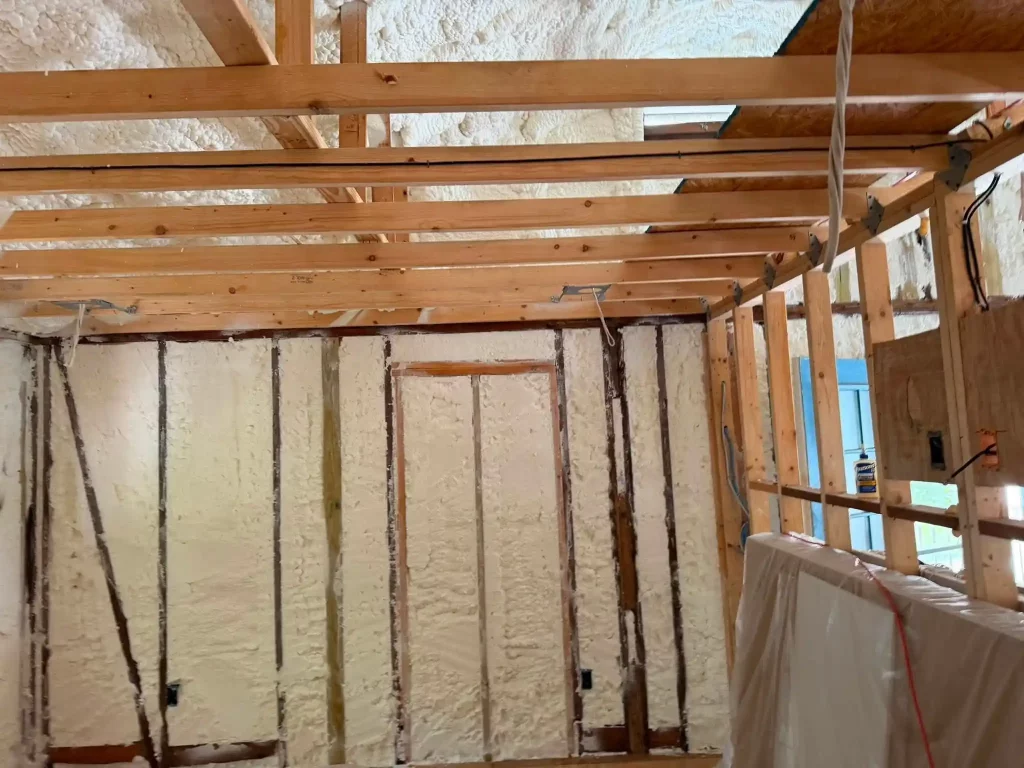
Our crew starts by sealing off living spaces and removing any damp or damaged material in the work area. We check the attic’s ventilation and moisture condition first, because sealing a wet assembly just hides the problem. Then we spray the foam in measured passes so thickness stays consistent.
Most single-attic jobs wrap up in one day, though bigger rooflines and multi-area projects take longer. You’ll stay out of the work zone while we spray, and expect some noise and a chemical smell during application that fades as the foam cures. We’ll walk you through the cure time and ventilation steps before we leave, and we verify coverage with depth checks, not eyeballing.
Good installers welcome sharp questions. These five separate the pros from the sprayers.
If your AC never seems to catch up, or summer bills keep surprising you, the attic is the first place we’ll look. Spray Foam Contractors LLC serves Lehigh Acres homeowners with honest assessments, the right foam for each space, and free quotes with no pressure. Call (239) 688-4979 or email [email protected] to schedule your free quote, and we’ll show you exactly where your house is losing cool air and what it takes to stop it.
Quality foam is designed to keep performing for decades, and it doesn’t sag, settle, or attract pests the way loose-fill can. Its actual lifespan depends heavily on correct mixing and installation.
Usually not. Old batts or loose fill should come out first so the foam bonds to clean wood and seals every gap instead of burying problems.
Plan to be out during application. Most manufacturers recommend staying out for about 24 hours after work, with the home ventilated, before you move back in.
It seals the leaks that carry humid attic air into your rooms, which eases your AC’s moisture workload. It’s not a dehumidifier, though, so any real humidity problem still deserves its own fix.
You’ll typically see the difference on your next full billing cycle, with the biggest change during the long cooling months. How much depends on your home’s starting condition.