

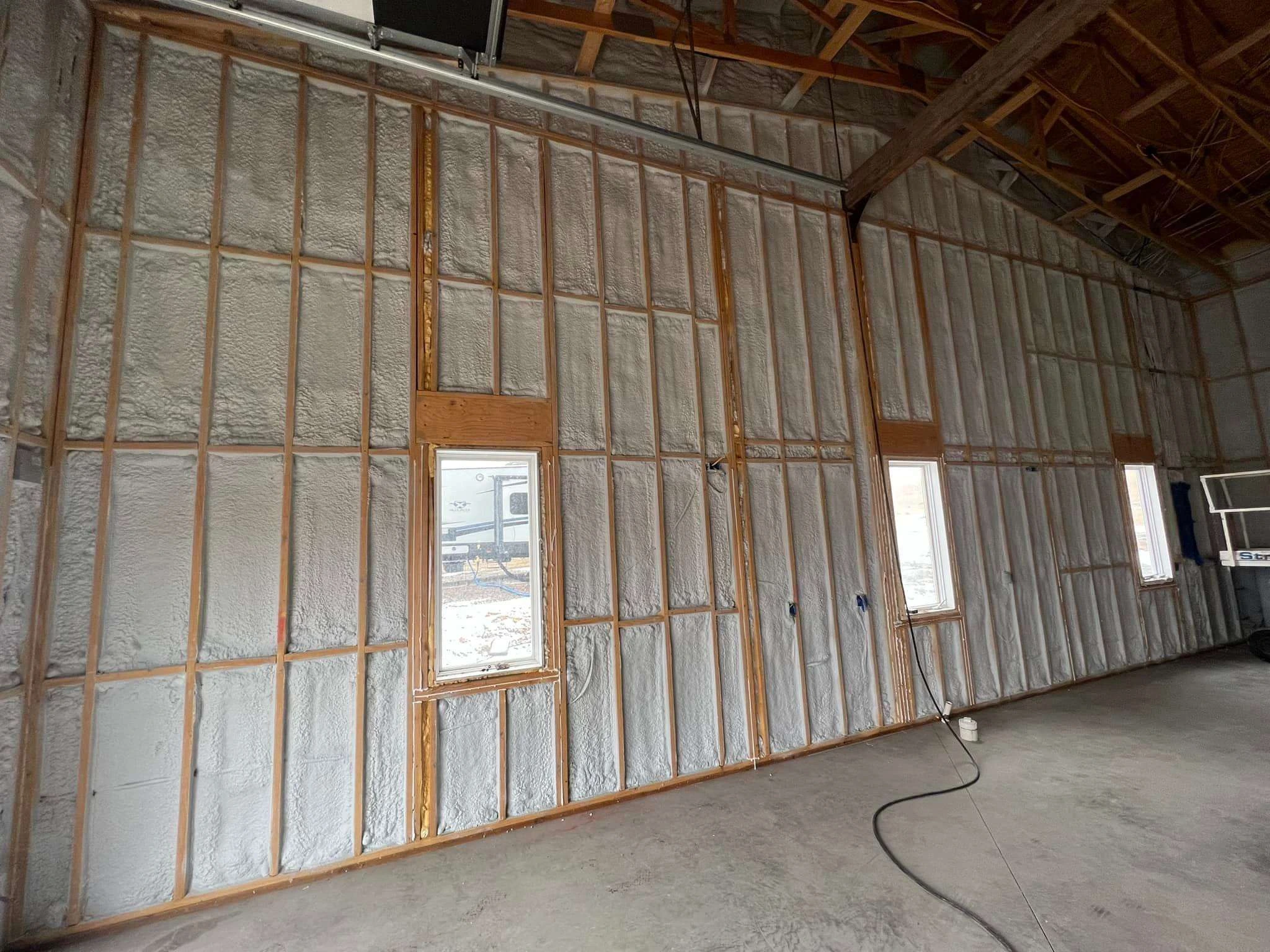
Lehigh Acres builders use spray foam insulation services to create tighter building envelopes by applying open-cell or closed-cell foam to roof decks, wall cavities, and crawlspaces, so a single product serves as insulation, air barrier, and moisture management layer. Because Southwest Florida homes run air conditioning most of the year, controlling uncontrolled air leakage matters more here than in most markets, and the U.S. Department of Energy reports that air leakage can account for 30% or more of a home’s heating and cooling costs. The right approach depends on the assembly: open cell foam suits vented-to-conditioned attics and sound control, closed cell foam suits walls, crawlspaces, and slabs where moisture resistance matters, and hybrid designs combine both. Below, we break down how envelope strategy works in Lehigh Acres, what it costs, and how to verify results.
A building envelope is the physical separator between the conditioned and unconditioned environment of a home, resisting the transfer of air, water, heat, light, and noise Wikipedia – Building Envelope. Building science ranks its control functions in a deliberate order: rain control first, then air control, then heat control, then vapor control.
In Lehigh Acres, that ordering shapes practical decisions on every lot. Our summers push indoor humidity loads hard, and building science research notes that moisture control is especially demanding in hot-humid climates. A home that leaks humid air into wall cavities or attic spaces invites condensation on cooling surfaces, which is why tightness is about durability and indoor air quality, not just energy bills.
The local market adds pressure. Lehigh Acres grew from 86,784 residents in 2010 to 114,287 in 2020, one of the fastest growth rates in Lee County, and much of the housing stock dates to the 2003-2007 construction boom Wikipedia – Lehigh Acres, Florida. Builders here compete on comfort and efficiency claims that buyers can verify, which makes envelope strategy a sales tool, not just a code requirement.
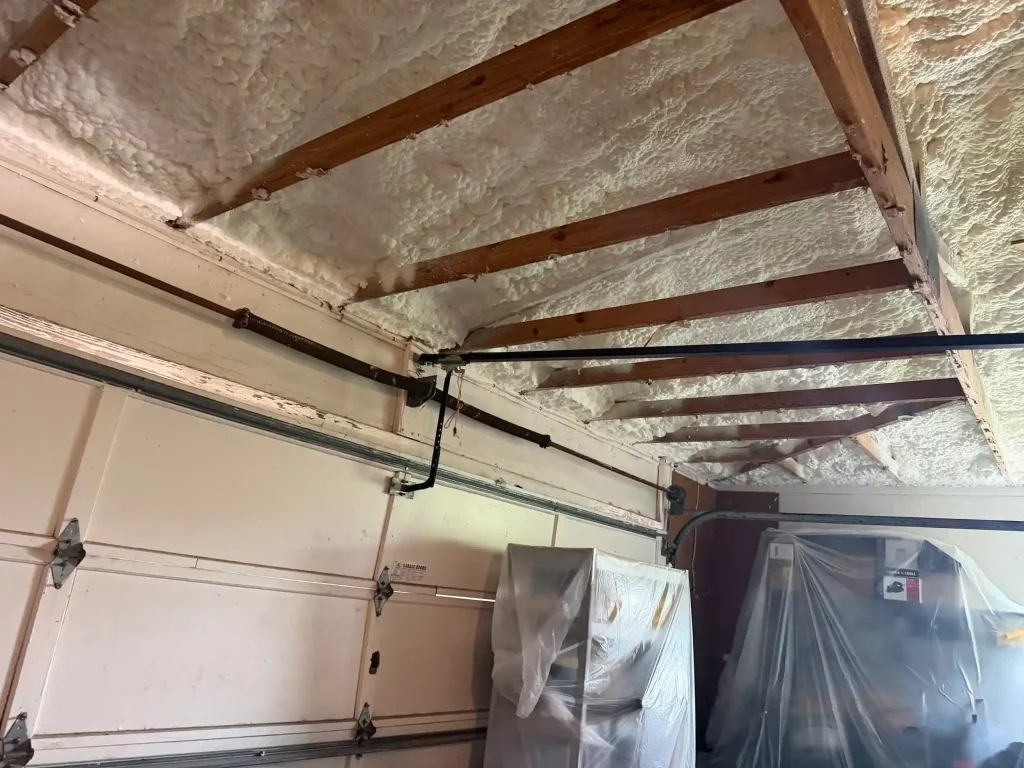
Fiberglass batts and blown products slow heat flow but leave air movement largely unaddressed. Spray polyurethane foam expands 30 to 60 times its liquid volume after application, filling gaps, crevices, and irregular framing that other products cannot reach Wikipedia – Spray Foam. That expansion is what turns insulation into an air barrier.
The performance difference comes from physics. Foam blocks all three modes of heat transfer, conduction, radiation, and convection, and its air sealing capability stops convective loops, the air movements within walls and ceilings that building research links to 10% to 20% of heat loss on its own. In a cooling-dominated climate like ours, the same mechanism blocks humid outdoor air from leaking inward around ducts, top plates, and penetrations.
There is also a comfort argument that closes deals. Homes treated with spray foam insulate as much as 50% better than traditional insulation products in the DOE studies cited in spray foam research, and sealed envelopes reduce the airborne noise that travels through walls and rooflines on busy Lehigh Acres corridors like Lee Boulevard.
Each assembly plays a specific role in the envelope, and we match the foam to the job:
This is the question homeowners ask us most, and the answer depends on the assembly, the moisture exposure, and the budget.
| Factor | Open Cell Foam | Closed Cell Foam |
|---|---|---|
| Density and feel | Half-pound, sponge-like | Two-pound, rigid |
| R-value per inch | About R-3.8 | About R-5.1 to R-6 |
| Air barrier performance | Air barrier at 5.5+ inches | Air barrier at roughly 2 inches |
| Vapor barrier performance | Not effective in thin layers | Doubles as vapor barrier at 2 inches |
| Sound control | Strong absorption | Moderate |
| Best applications | Attic roof decks, interior walls | Walls, crawlspaces, metal buildings, flood-exposed slabs |
| Typical project price (our data) | $4,000 to $30,000, averaging $9,000 | $4,000 to $100,000, averaging $30,000 |
Closed cell’s added rigidity and moisture resistance explain its premium. Open cell delivers excellent coverage per dollar in attics, which is why it anchors most new construction attic strategies.
Our project pricing data is consistent about what moves cost:
Home sizes in our market, mostly 1,500 to 4,000 square feet, put most residential foam projects squarely in the ranges listed above.
A tight envelope is a measured claim. A blower door test depressurizes the home and quantifies air sealing quality, giving builders documentation they can hand buyers and inspectors. We recommend pairing verification with a whole-house spray foam insulation systems approach, because the DOE notes that air sealing interacts with insulation, moisture control, and ventilation, and climate-specific construction details should guide the design U.S. Department of Energy – Air Sealing for New Home Construction.
One caution worth repeating: as envelopes get tighter, controlled ventilation becomes part of the design rather than an afterthought. The recommended strategy is to reduce uncontrolled leakage as much as possible, then provide ventilation deliberately.
| Audience | Recommended Approach | Key Notes |
|---|---|---|
| Production builders | Open cell in unvented attics, closed cell at band joists | Predictable pricing near $9,000 on typical homes, strong efficiency story for model homes |
| Custom builders | Hybrid: closed cell walls, open cell roof deck | Premium performance and moisture resilience justify the $30,000 average closed cell investment |
| Remodelers and retrofit crews | Closed cell crawlspaces plus retrofit wall injection | Solves humidity complaints in 2003-2007 era homes without demolition |
| Commercial builders | Closed cell on metal structures and conditioned commercial spaces | Rigidity and vapor performance suit commercial assemblies, projects up to $100,000 |
You are on the right track when your insulation partner explains open cell versus closed cell tradeoffs by assembly instead of pushing one product, prices transparently against the factors above, schedules foam installation around your framing and drywall sequence, and offers blower door verification as standard practice. Clear answers about curing times, off-gassing, and ventilation planning are just as telling as the R-value sheet.
At Spray Foam Contractors LLC, we help Lehigh Acres builders and homeowners create verified, tight building envelopes with open cell spray foam, closed cell spray foam, attic insulation, and insulation removal and replacement services. Our team installs spray foam in Lehigh Acres and the surrounding Lee County market, on jobs from single attics to full commercial builds. Call us at (239) 688-4979 or email [email protected] to get a free quote.
Request a Free Quote Schedule an Envelope Assessment
Let our team show you what a tighter envelope can do for your build schedule, your buyers, and your energy performance claims.
Most residential foam projects we install are completed in one to two days, depending on square footage and access. Larger closed cell projects on custom homes or commercial buildings take longer based on thickness requirements.
Spray foam emits temporary fumes while curing, and occupants should stay out during application and the curing period. Once fully cured, the foam is inert and odor-free, which is why we coordinate re-entry timing with your construction schedule.
Open cell is our most common choice for Lehigh Acres attic roof decks because it delivers full air sealing at a lower project cost, averaging around $9,000. Closed cell fits attics where added moisture resistance or rigidity is a priority.
Yes, tight envelopes work best with a deliberate ventilation plan rather than accidental leakage. We design foam scope alongside ventilation considerations so indoor air quality and energy performance improve together.
We will handle any square footage when the customer accepts our company minimum trip fee, which covers crew and equipment for the day. Our focus is on projects of 1,000 square feet or more, including attics, crawlspaces, walls, and commercial buildings.