

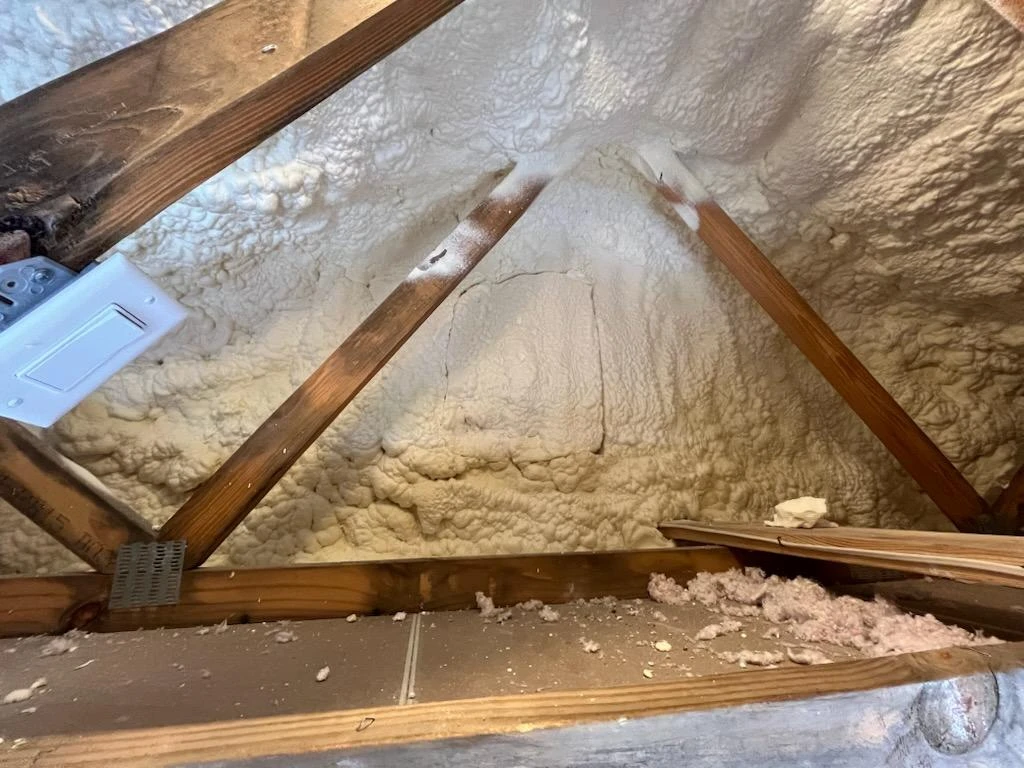
The right time to replace existing insulation with spray foam in Lehigh Acres is when your old insulation is wet, moldy, soiled by pests, flattened, or too thin, or when your attic or walls are already open for a roof, drywall, or remodel job. Spray foam goes onto bare framing, so the old material comes out first.
Most homeowners hope they can spray right over what’s already up there. That doesn’t work, and knowing why helps you plan the job and budget.
Spray foam has to expand into every gap to form its air seal, and a layer of old insulation blocks it from doing that. That’s why installers vacuum out old fiberglass or cellulose before they spray. If you skip removal, you pay for foam that can’t do its main job.
Walls work the same way. An installer needs full access to the wall cavity to pull out old batts and spray foam in their place, which is why wall upgrades usually line up with drywall or siding work.
Lehigh Acres stays hot and humid for most of the year, and that’s hard on fiberglass and cellulose. Lee County carries a warm-humid designation in the energy code’s climate tables, so moisture is the main thing working against your attic.
| Sign | What It Usually Means | Next Step |
|---|---|---|
| Stains, damp spots, musty smell | Roof leak or condensation | Fix the leak, then remove wet insulation |
| Droppings, nests, tunnels | Rodents or insects moved in | Pest control, then full removal |
| Flat, clumped, or thin coverage | Material has settled and lost R-value | Measure depth, plan an upgrade |
| Hot rooms and rising power bills | Air leaks and weak attic coverage | Inspection and air sealing |
| Gaps around lights, pipes, vents | Poor original install | Sealing or spray foam upgrade |
Any one of these is worth a closer look. Two or more together usually means removal is cheaper than patching.
Timing can save you real money. The best moments are when the work area is already open or the old material is already ruined.
When the roof deck or drywall is off, the framing is exposed. That cuts labor and gives the crew clean access for a tight seal.
Hurricane season can bring roof damage and soaked attic insulation. Wet fiberglass or cellulose holds moisture against the wood, so it should come out once the roof is fixed.
The ENERGY STAR retrofit chart recommends R30 to R49 for an uninsulated attic in climate zones 1 and 2, or R25 to R38 if you already have 3 to 4 inches of insulation. If a tape measure shows you’re well under that, an upgrade is worth pricing.
Knowing the steps helps you plan around the job. A typical spray foam insulation installation replacement follows this order:
Safety matters here. The EPA says occupants should leave during installation and stay out until the foam has cured and the home has been ventilated and cleaned. Some manufacturers suggest about 24 hours, but the time varies by product. Ask your installer for the exact re-entry time before work starts.
Code matters too. DOE notes that foam generally must be covered by an approved thermal barrier equal in fire resistance to half-inch gypsum board, so ask how your attic will meet that.
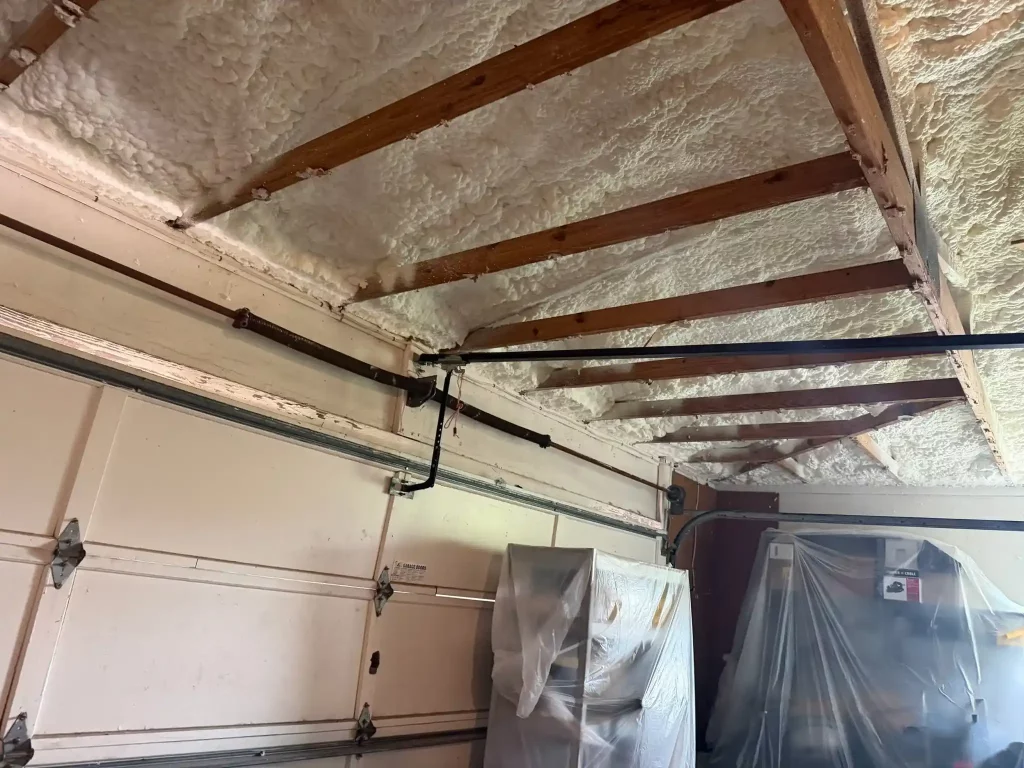
Spray foam isn’t the answer for every home. If your attic insulation is dry, clean, and close to the recommended depth, topping it up with blown-in material may cost far less.
Closed walls are another limit. Opening finished drywall just to switch insulation can cost more than the energy savings return. U.S. Department of Energy also warns that quotes for the same R-value can vary by more than a factor of two, so get written estimates from more than one contractor.
Before you call anyone, take 15 minutes and check:
If you checked two or more, it’s a good time for an inspection.
If your attic shows water damage, pest mess, or thin coverage, Spray Foam Contractors LLC can inspect it and tell you whether removal and spray foam make sense for your home. We’ll walk you through open-cell and closed-cell options and give you a clear price up front.
Call (239) 688-4979 or email [email protected] to book your free quote in Lehigh Acres, FL.
No. Spray foam needs to bond to bare framing and expand into gaps. Old batts or loose fill block that, so the old material is removed first.
Standard spray foam needs open wall cavities. Some injectable foams can fill closed, empty walls, but they’re a different product with their own limits.
Plan on leaving during the install and until the foam cures and the house is aired out. Many manufacturers suggest around 24 hours, but your installer should confirm the time for the product used.
Closed-cell resists moisture better and gives more R-value per inch. Open-cell costs less and works well in dry spots. Your attic’s moisture risk usually decides it.
Yes. Wet or moldy insulation loses its insulating value and can hold moisture against the wood. Fix the source of the water first, then remove and replace it.